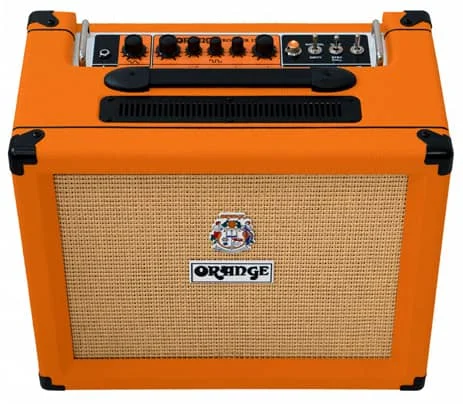
DISCOVER the Best Orange Amplifiers for Electric Guitar and Their Features (GUIDE): Crush, Micro Terror, Micro Dark…
Orange is a British amplifier brand that has played a prominent role in the history of the electric guitar and bass, thanks to its contributions to amplifier innovation and development. Its products have been used by true music legends.
These amplifiers are known for their distinctive orange vinyl casing. Although different finishes, such as white or black, are now available.
But what makes the Orange brand truly unique is its distinctive and characteristic sound. We often talk a lot about the sound of guitars and their components, but we frequently overlook the distinctive sound contributed by the amplifier itself.
The brand is best known for its high-gain or heavily distorted sounds. These amplifiers deliver a thick, punchy gain that is highly prized and popular among guitarists in the hardest and heaviest genres.
In addition, the brand is well known for its great versatility. It produces both clean and slightly distorted tones, as well as high-gain sounds, with great precision.
History of Orange Electric Guitar Amplifiers
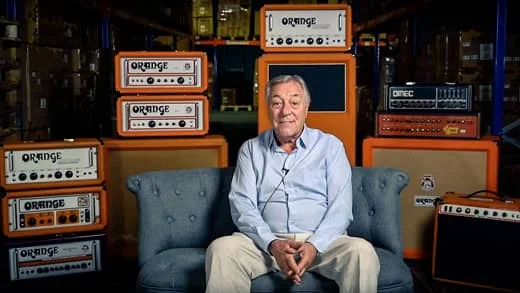
This company was founded in 1968 by musician and electronic designer Clifford Cooper. In 1972, the brand produced one of its most iconic amplifiers: the Graphic Valve Amplifier, also known as the Pics Only. This model began to define the Orange sound and is the benchmark in their amplifier design.
But to avoid getting bogged down in the different models developed throughout the manufacturer’s long history, we’ll focus on the ranges currently available on the market.
In 2010, the manufacturer began producing some amplifier models in China, following the widespread trend of cost reduction in Asian countries. This might be met with some resistance from certain consumers, but it’s undeniable that it allows us to enjoy certain luxuries at relatively affordable prices.
Orange Crush Series Electric Guitar Amplifiers
Orange Crush 20
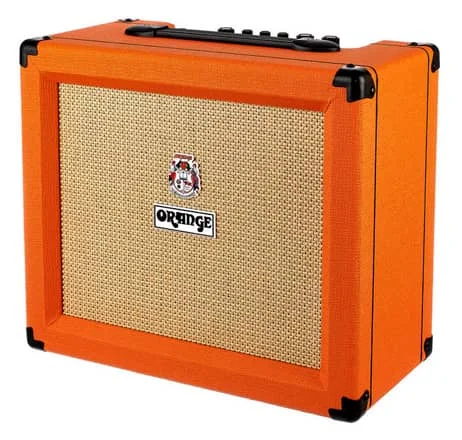
One such line of Chinese-made products is the Crush series, such as the Orange Crush 20. It’s a transistor combo amp designed for practice, featuring the brand’s signature clean, minimalist aesthetic, at a moderate price of around $180.
This amplifier does not feature any effects other than the incredible distortion generated by the amplifier itself. The Crush 20 can produce clean tones of a certain quality, as well as slightly distorted, high-gain tones with a truly impressive roar and virtually infinite sustain making it ideal, for example, for use with tremolo bridges.
Orange Crush 20 RT
We can also opt for the Orange Crush 20 RT for around $230. This model includes a headphone output, just like the previous one, but with a reverb effect and a built-in tuner.
In this series, we can find models with both lower and higher power output than those mentioned above, such as the Orange Crush 35 RT at a reasonable price of around $350.
These models are the best-sellers in this range, but as mentioned, there are models that can deliver even more power (Orange Super Crush 100 Combo), although their price rises to $850 even though they’re made in China.
The transistor-based Orange Super Crush 100 is available as a head for a reasonable price of around $600 a very attractive option if you already own a speaker cabinet.
Orange Hybrid Guitar Amplifiers
Orange Micro Terror
Let’s move on to hybrid amplifiers, which feature both tube and transistor amplification stages. Among this type of amplifier, we find one of the most popular Orange head amplifiers: the Orange Micro Terror.
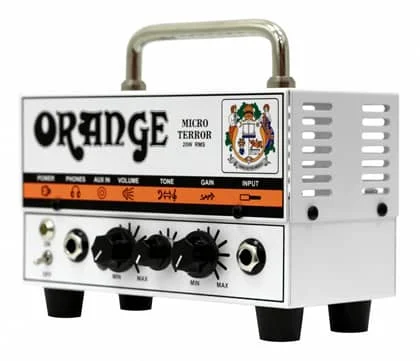
This amplifier features a 12AX7 ECC83 preamp tube and a 20-watt transistor power stage. It’s a simple, compact amplifier that can easily drive a 12-inch, 8-ohm speaker and delivers Orange’s signature British sound at an unbeatable price of $160.
It also features a headphone output and an auxiliary input for connecting a smartphone or MP3 player, and although it lacks an effects loop, it works very well with effects pedals connected directly to the front panel of the amp.
The Micro Terror can reach Metal music tones in its most extreme settings, but due to its slightly more defined tone compared to other Orange amps, it’s better suited for rock than metal.
Orange Micro Dark
But for heavier genres, we have the Orange Micro Dark. It’s an amplifier that’s very similar in appearance and price to the Micro Terror, but with a more aggressive and darker sound, as its name suggests.
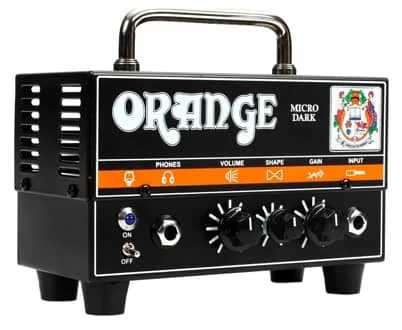
The Micro Dark does feature an effects loop, specifically so that its high gain doesn’t degrade the sound of delay or reverb pedals.
Cabinets for Micro Terror and Micro Dark
When it cabinets for the Micro Terror, only an 8-ohm cabinet would work for us. But for the Micro Dark, we can use either 8 ohms or 16 ohms. However, an Orange cabinet with a 12-inch, 16-ohm speaker typically costs more than $400. That said, it is equipped with a Celestion Vintage 30 speaker.
In any case, you can check out the page on Amplifier Cabinets, which lists several options offering the best value for the money.
Orange Tube Electric Guitar Amplifiers
Orange Rocker
When it comes to Orange all-tube electric guitar amplifiers—where all stages of amplification are generated by vacuum tubes—the price tag starts to skyrocket, as is the case with the Orange Rocker 15. This amplifier is priced at around $750, even though it’s manufactured in China, just like the Orange Rocker 32, which costs approximately $1.000.
That said, the Rocker 32 is a true powerhouse with 30 watts of tube power, featuring 6 vacuum tubes in the preamp stage and 4 in the power stage. It comes equipped with two 10-inch speakers and both mono and stereo effects loops.
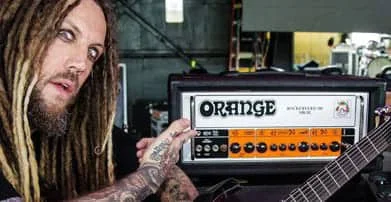
If these Asian-made amplifiers are quite expensive, you can imagine how much an Orange amplifier made in the United Kingdom might cost. For example, the Orange Rockerverb 50H MKIII costs well over $2.750. In short, these are amplifiers reserved for true professionals like Jim Root of Slipknot or Brian Head Welch of Korn.
Both guitarists use head-style amplifiers from the Rockerverb series.
AD Series and Bass Amplifiers
But it’s not just famous metal guitarists who use Orange amplifiers. For example, one of Orange’s most popular lines is the AD series (AD30), used by the legendary guitarist Jimmy Page. This series features the classic, warm, traditional sound that’s ideal for genres like rock and blues.
But the British brand isn’t just a leader in electric guitar amplifiers; it’s also a renowned manufacturer of bass amplifiers. The brand’s models are a favorite among bassists such as Steve Harris of Iron Maiden, Geddy Lee, and Glenn Hughes.
The Origin of Orange Amplifier Symbols
To wrap things up, I’ll share a little story about the distinctive symbols that appear on the controls of Orange amplifiers. Clifford Cooper came up with the idea to place these symbols on his products after noticing traffic signs while driving through London.
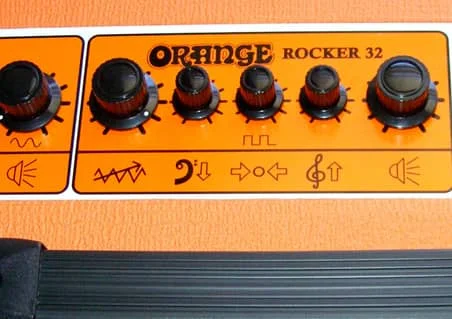
So he asked his design team to create a specific symbol for each control on his amplifiers. These symbols were intended to clearly illustrate the function of each control, making them easier for non-English-speaking users to understand. This eventually became an unmistakable hallmark of the brand.
As is the case with most companies with a long history, Orange has also experienced its share of ups and downs. But a great brand always knows how to reinvent itself and adapt to market needs without losing its essence. Today, Orange is considered one of the largest manufacturers of amplifiers.