
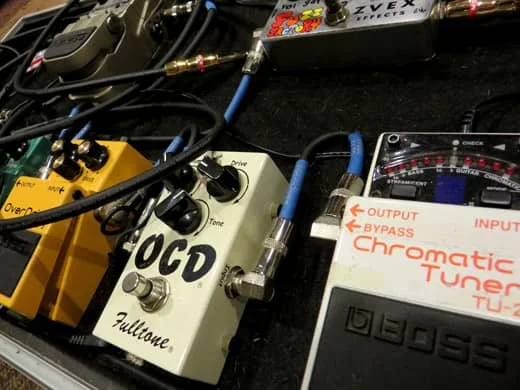
Effect Guitar Pedal Order COMPLETE GUIDE. How to Arrange Different Pedals on an Electric Guitar Pedalboard and Learn How to Use the Amplifier’s EFFECTS LOOP.
It is essential to understand how different electric guitar effects pedals behave, depending on their position in the effects chain.
Order of Guitar Distortion Pedals
Let’s start with distortion pedals. This effect is so widely used that it’s hardly even considered an effect anymore. It’s common for players to own several distortion pedals with different levels of gain.
These distortion pedals should be arranged from lowest to highest gain, starting from the guitar’s position. Using this method ensures that the distortion blends together perfectly when multiple gain pedals are used simultaneously.
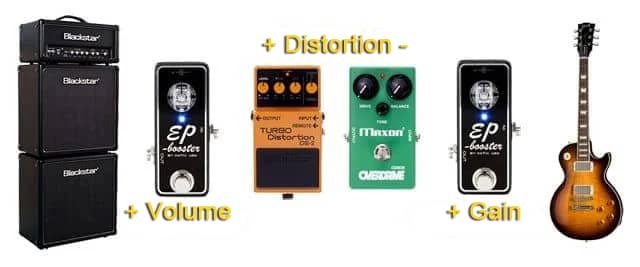
Where to Place the Booster Pedal
A booster pedal is used to amplify sound, for instance during guitar solos, or to increase the gain. But the effect will vary depending on where you place it on your pedalboard.
If you put the booster before the distortion pedals, it will increase the sound’s volume and gain, adding its own touch of distortion. Conversely, if you place it after the distortion pedals, it will simply amplify the sound without introducing distortion.
The remaining effects should be placed either before or after the aforementioned pedals, bearing in mind the signal path from the guitar to the amplifier.
Effect Guitar Pedal Order After Distortion
Modulation, Delay, and Reverb Effects
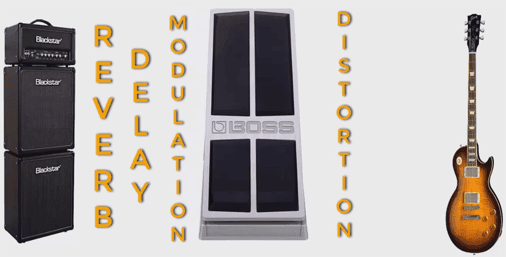
Modulation effects such as chorus, flanger and phaser are placed after distortion effects. After the modulation effects come delay and reverb.
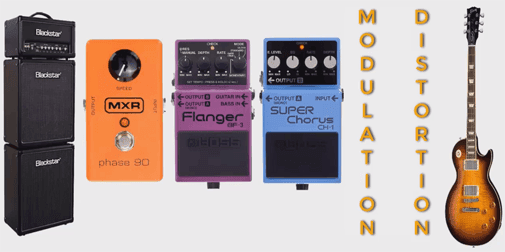
These effects are placed after the distortion pedals to ensure that the distortion does not compromise their quality. This ensures that their clarity and depth remain intact.
It is common practice to use an amplifier’s distortion to achieve the desired sound. In this case, the distortion would occur after these effects, which may consequently be compromised.
How to Use the Amplifier’s Effects Loop
We have the effects loop to resolve these potential issues mentioned above. This is a very distinctive feature of high-gain amplifiers, which are capable of generating a distorted sound independently.
If you plan to use heavy amp distortion alongside modulation, delay or reverb effects, it is advisable to make use of this feature. However, not all amplifiers offer this option.
We can route these effects through the effects loop connections. The rest of the pedals will be connected to the front panel of the amplifier.
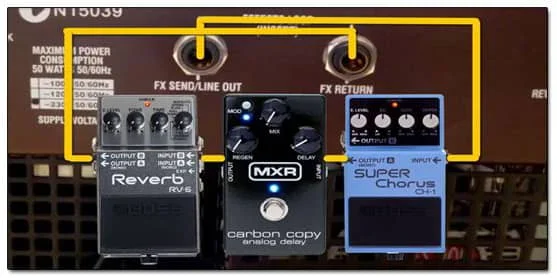
First, we would connect the output from the loop to the signal input of the first pedal (for example, the chorus pedal). Then, we would connect the rest of the pedals in the standard order. When we reach the final output, we connect it to the return of the amplifier. This ensures that the signal has been fully processed by the time it reaches these types of pedal.
Effect Guitar Pedal Order Before Distortion
Between the guitar and the distortion pedals, I’d put the compressor, the fuzz and the wah-wah.
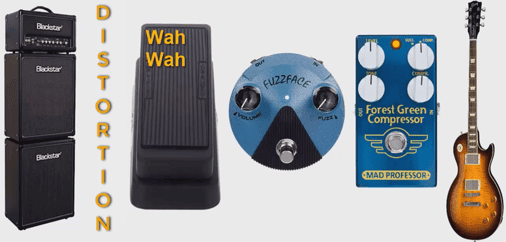
Different Volume Pedal Positions
The volume pedal is commonly used to create volume swells, or to adjust your guitar’s sound without using your hands. The behaviour of this pedal depends on its position in the effects chain.
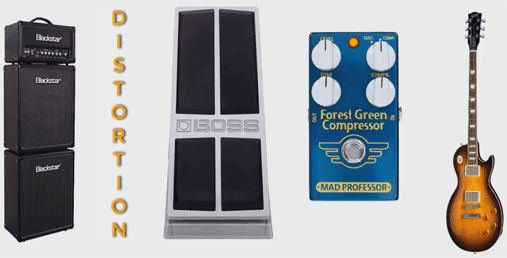
The important thing to remember about the volume pedal is that it should be placed after the compressor. If you place it before the compressor, the two pedals will conflict with each other.
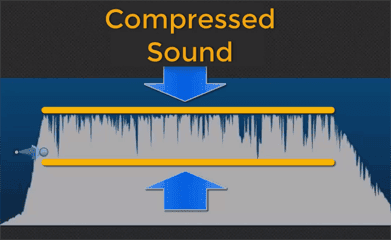
The main function of the compressor is to control both high and low volume peaks, thereby maintaining a more consistent and compact volume. Consequently, the compressor increases the volume of quiet notes slightly and reduces the volume of loud notes slightly.
Volume Pedal Before Distortion
One possible position for the volume pedal would be after the compressor and before the distortion pedals. This ensures that the volume pedal does not interfere with the compressor’s operation.
Therefore, pressing the volume pedal would add both volume and gain to the sound. The level of distortion decreases when you turn the volume of the pedal down. The sound produced by effects such as delay or reverb is also preserved when the volume of the pedal is turned down to its minimum setting. This means that the sound won’t cut out suddenly, which is useful for creating effective volume swells.
Volume Pedal After Distortion
To avoid the volume pedal adding gain when activated, place it between the distortion and modulation pedals. This means that when you press the pedal, only the volume will be affected, without any gain being added to the sound. This preserves the tails of echoes and delays.
To completely cut off the sound when you press the volume pedal, place it at the very end of the pedalboard.
Tuner position on the pedalboard
The tuner can be placed at the start of the signal chain. However, some volume pedals, such as the Boss FV-500H, feature a dedicated tuner output.
Effect Guitar Pedal Order: Equalizer Positions
The placement of an equaliser would depend on which parts or effects in the signal chain we wish to equalise.
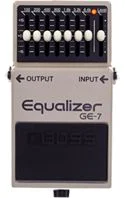
Equalizer Pedal at the Beginning of the Pedalboard
A commonly used position would be at the start of the signal chain. This ensures that the equalizer only affects the frequencies of our guitar and will equalize a pure signal, free of noise or unwanted frequencies. The equalisation would be less noticeable in this position than in other parts of the signal chain, such as between distortion and modulation pedals. If the equalizer is placed in this section, it will affect the already distorted signal and the frequencies of the distortion.
In this position we can also use the equalizer as a booster because it amplifies the sound when switched on. We can adjust the pedal’s volume to our liking while emphasising the desired frequencies.
Equalizer Pedal at the End of the Pedalboard
The equalizer would have the most noticeable effect at the end of the signal chain or via the effects loop, as it would act on the fully processed signal.
Although amplifiers usually have an equalizer, equalizer pedals tend to have more frequency bands. Unlike standard bass, middle and treble controls, the EQ pedal allows us to actively adjust specific areas, such as the sound of our guitar, the distortion or the overall sound.
The equaliser is typically placed either before or after the distortion pedals. Some guitar players opt for two equalizers, with one positioned before and one after the distortion effects.
Effect Guitar Pedal Order: Noise Gate
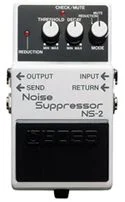
The noise gate should be positioned immediately after the source of the unwanted noise. As distortion pedals tend to generate the most noise, it is best to place the noise gate immediately after them. This ensures that the tails of modulation, delay and reverb effects are not affected.
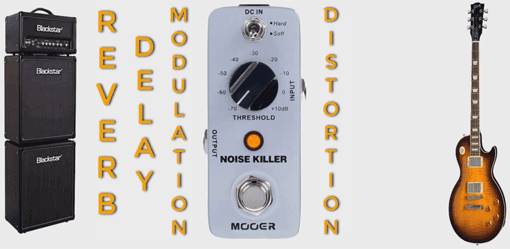
If you are using the amplifier’s own saturation, place the noise gate at the start of the effects loop to avoid affecting any pedals located further downstream. However, if you have a pedal that generates noise, you should place the noise gate immediately after that noise source.
As explained on the page “How to Eliminate Noise from a Guitar Amplifier“, it is always best to identify all the factors that can cause unwanted noise before installing a noise gate.
Guitar Pedal Order: Buffer
If we notice that our guitar has lost some of its characteristic tone due to the cable length between the guitar and the amplifier after filling our effects chain with pedals featuring the famous true bypass circuit, we can use pedals that incorporate a buffer to restore that tone.
All Boss pedals, for example, feature a buffer. Similarly, the TC Electronic PolyTune 3 tuner incorporates a buffer to boost your signal. Alternatively, you can use standalone buffer pedals. Place these at the start of the chain to boost the signal.
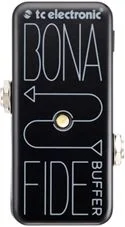
If we are unable to fully restore the tone, we can add an additional buffer to the end of the signal chain. This ensures that the signal reaching our amplifier is as fresh as if the guitar were connected to it directly with a one-metre cable.
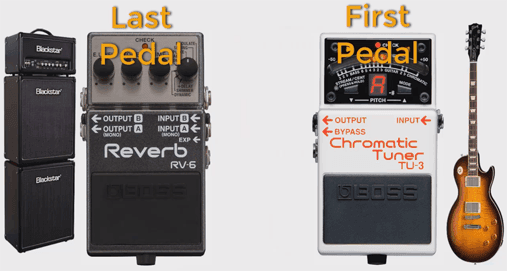
One trick to ensure we don’t lose any tone is to buy two effects pedals that feature a built-in buffer, such as Boss pedals, and place one at the start of the chain and the other at the end. For example, we could put the Boss TU-3 tuner at the beginning and the Boss RV-6 reverb at the end. This would ensure that the buffers built into these pedals restore the tone.
Guitar Pedal Order: Other Effects
Tremolo
These are the general points to bear in mind when arranging the order of effects pedals. Finally, I’ll outline the placement of a few pedals that can cause confusion, such as a tremolo pedal.
The tremolo creates a swaying effect with variations in volume. As it is a modulation effect, however, it should ideally be placed in the final position at the end of your pedalboard.
The tremolo creates a swaying effect with variations in volume. However, since it is a modulation effect, it should be placed at the end of your pedal board or in the final position.
Armonizador, Drop, Octavador y Pitch Shifte
Harmoniser, drop, octave and pitch shifter pedals, such as those in the Whammy series developed by Digitech, should be placed at the beginning of the effects chain, before the distortion pedals. For example, between the Wah-Wah pedal and the distortion pedal.
Simulador de Guitarra Acústica, Preamplificador, Phaser y Looper
Acoustic guitar simulators are usually used with compression, delay and reverb effects. Therefore, we can position it after the compressor and before the delay and reverb.
The preamp pedal should be positioned in much the same way as a booster. Consequently, it should be placed either before or after the distortion pedals, and before the modulation pedals.
Of all the modulation pedals, the phaser would be the one that would work best before the distortion. So this position would also be a viable option.
Finally, since the looper is a recording pedal, it should be placed at the end of the effects chain.