
DISCOVER the most popular types of reverb effects: Hall, Room, Spring, Plate, Shimmer and Reverse. What is Reverb Used For?
Reverb is a time-based effect, just like delay. However, whilst delay simulates an echo produced in an open space, reverb simulates an echo generated in an enclosed space. Consequently, reverb produces a more compact and uniform effect.
Reverb is one of the most widely used effects in music production, as it is applied to virtually all instruments, including vocals.
In spaces where echoes are virtually non-existent, our voice will sound quiet and dry, and the sound will fade away almost instantly. Whereas in other spaces that allow echoes to form, our voice will sound more powerful and resonant, meaning the sound will linger slightly after it has been produced.
What is Reverb Used For?
Many people who wouldn’t be able to hit a note in a million years find themselves singing at the top of their voices when they’re in the bathroom, thanks to the acoustics of the tiled walls. That resonance makes it easier for us to sing in tune, which is why our artistic side quickly comes to the fore when we’re having a shower.
In recording studios, a basic rule is to always apply a reverb effect to vocals, typically a hall reverb, even if it is only routed to the singer’s headphones and not the recording track.
This makes the singer feel more comfortable whilst singing, even if the recording track remains dry, so that they can experiment later to see which effect will suit the final mix best musically.
But it’s not just singers who like this effect; the vast majority of guitarists also tend to use it to a greater or lesser extent, so that the sound coming from our amplifier’s speaker doesn’t sound as dry as a parrot’s tongue.
In fact, it’s very common to find this effect already fitted as standard in most amplifiers. Even a legendary amplifier like the Fender Twin Reverb uses the effect as a selling point. This highlights the distinctive characteristics of its spring reverb, a type of reverb also commonly known as ‘Sprint Reverb’.
In rooms with a lot of echo, we should minimise the use of reverb. This is because if we combine strong reverb with the room’s own echo, the sound can become too muddy.
Most Popular Types of Reverb
Effects REVERB: SPRING
Spring reverb, or the classic spring reverb effect that used to be fitted to old amplifiers, but which is still very much in use today.
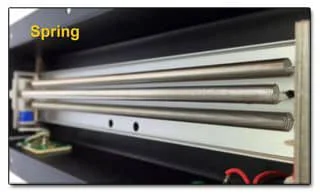
This was an ingenious way of creating reverb mechanically. And whilst it is not an entirely natural echo, given its rudimentary nature, it is certainly part of the history of the effect, and of the reverb sound in the truest vintage style.
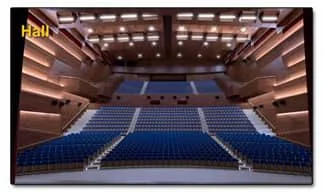
HALL
The Hall reverb mimics the long echo that would occur in a large concert hall, and is one of the most popular types of reverb, given its versatility, depth, naturalness and grandeur. Who wouldn’t want to sound as if they were playing in a magnificent auditorium?
Effects REVERB: ROOM
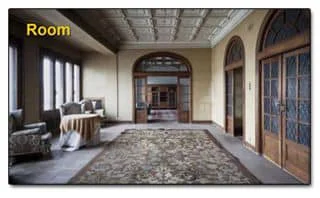
The Room reverb simulates the acoustic response of medium-sized or small spaces. It is also a very natural reverb, but with a faster decay, and a drier sound with less brightness than the Hall reverb.
Effects REVERB: PLATE
El Plate simula los viejos Reverbs de Placas usados en los estudios de grabación antes de la llegada de los efectos digitales. Aunque no resulta un efecto muy natural, sí que forma parte de los sonidos históricos de la vieja escuela, muy usado en la reverberación de voces.
The Plate effect simulates the old plate reverbs used in recording studios before the advent of digital effects. Although it isn’t a very natural-sounding effect, it is certainly part of the classic, old-school sounds and is widely used for vocal reverb.
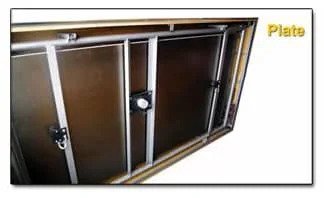
Like the Spring, the Plate is a way of generating reverb mechanically, but instead of springs it uses metal plates. With this effect, you’ll get the typical ‘click’ of the Spring, and a sound similar to the Hall, although less deep and three-dimensional.
REVERSE
Nowadays, other effects such as ‘Reverse’ have been added to the classic reverb effects. As the name suggests, this effect reverses the echo signal, producing a soft initial sound that then increases in volume until it reaches its actual starting point, creating an unsettling effect.
SHIMMER
Another of these new reverb effects is the Shimmer. It’s very useful for creating immersive, atmospheric accompaniments, as it gives the impression that the guitar is accompanied by an organ or a synthesiser.