
DISCOVER the Differences Between the Best Marshall Amplifiers (Guide). The British brand Marshall hardly needs any introduction. It is one of the best-known brands and a pioneer in the design and manufacture of legendary amplifiers.
The British brand Marshall hardly needs any introduction. It is one of the best-known brands and a pioneer in the design and manufacture of legendary amplifiers.
If I had to list all the guitarists who have used a Marshall to create some of their songs, I’d never finish. These amplifiers have been an essential part of the sound of iconic bands like Iron Maiden and legendary guitarists such as Angus Young of AC/DC, Slash, and Gary Moore.
When Marshall Created the HIGH-GAIN Amplifier
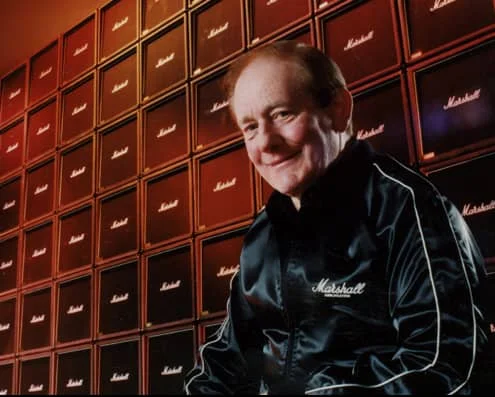
This brand was founded in London by drummer Jim Marshall and his son Terry in the early 1960s, in a small shop selling musical instruments and accessories that was frequented by young talents such as Pete Townshend and Ritchie Blackmore. Their shop was more focused on the emerging rock music scene than the traditional music stores of the time, which were primarily dedicated to jazz instruments.
These young guitarists told Jim that the amplifiers available at the time lacked volume and punch. As a result, Jim Marshall, along with his son Terry and other collaborators, began producing amplifiers based on the model that had the most punch at the time: the Fender Bassman.
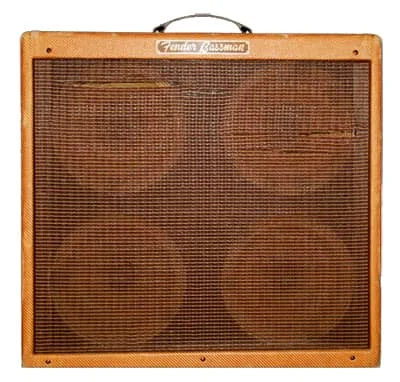
An amplifier designed for electric bass that would change the history of guitar amplifiers. This amplifier was very popular back then among guitarists looking for a more powerful sound.
Marshall kept the Fender Bassman circuit virtually intact, using 5881 power tubes, similar to the well-known 6L6, along with an ECC83 tube in the first stage to generate more gain, also known as 12AX7, unlike the 12AY7 used in the first stage by the Bassman of that era.
Jim decided to separate the amplifier and the speakers into two parts to make them easier to transport. Marshall’s intention was to install 12-inch speakers from the British manufacturer Celestion in a 4×12 cabinet, as opposed to the four 10-inch Jensen speakers used in the development of the Fender Bassman.
Marshall closed off the rear of its speaker cabinets in order to achieve a more powerful and aggressive sound, rather than the classic open cabinet design of Fender amplifiers.
Marshall Classic Amplifier Series
Amplifiers Marshall: JTM 45
The Marshall JTM 45 was finally introduced in 1962. The name is an acronym for Jim and Terry Marshall, plus the amplifier’s 45-watt power output.
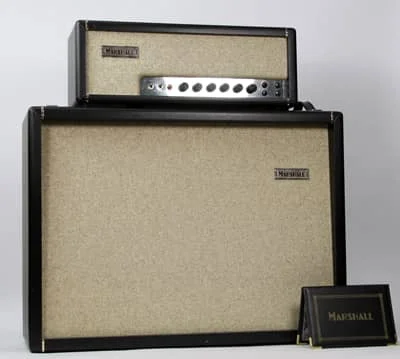
In a short time, the JTM 45 became one of the most popular amplifiers and served as the basis for the creation of other models, such as the first combo-style amplifier developed by Marshall in 1964: the Bluesbreaker. With this amplifier, Marshall began using KT66 power tubes instead of the 6L6 vacuum tubes commonly used in the United States.
This amplifier was designed based on specifications provided by guitarist Eric Clapton. Clapton had asked Marshall to create an amplifier with a tremolo effect that he could use on stage but that would fit in the trunk of a car, back when he was a member of John Mayall & the Bluesbreakers.
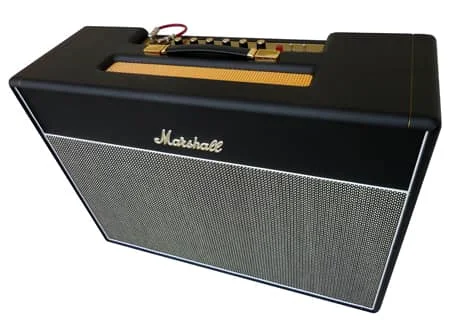
Hence the name of one of the most famous and sought-after amplifiers among collectors today. These days, people often pay high prices for the original models. Yet when this amplifier first went on sale, it cost half as much as a Fender Bassman and one-third the price of a Vox AC30 from that era. Today’s reissues of the Bluesbreaker sell for around $2,900. Such are the ironies of fate.
Marshall Super Lead 1959: Plexi
In contrast, other guitarists, such as Pete Townshend, preferred more powerful amplifiers. This led Marshall to design the 100-watt Marshall Super Lead 1959 head. The legendary original Plexi, released in 1965. This amplifier earned its nickname from its plexiglass front panel, which was replaced in 1969 by a gold-colored aluminum panel.
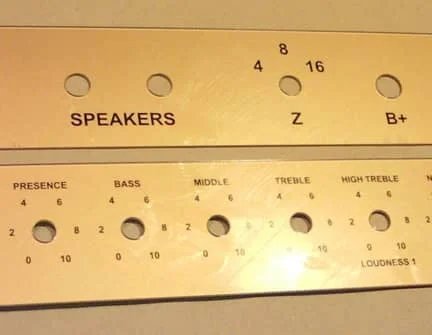
The Plexi era not only gave rise to an amplifier style with pronounced yet balanced distortion, but it is also widely recognized as a distinct style known as “Plexi sound”, which would be emulated by other amplifier manufacturers (such as the Friedman BE-100 Deluxe Head) and even in effects pedals (such as the Carl Martin PlexiTone). In short, saying “Plexi sound” is much like saying “the sound of rock”.
The Marshall Stack Is Born
At Pete Townshend’s request, Marshall built an 8×12 cabinet for the Super Lead 1959, but it proved impractical and was soon replaced by a pair of 4×12 cabinets stacked on top of each other, with the 1959 amplifier perched on top. This gave rise to the classic Marshall stack.
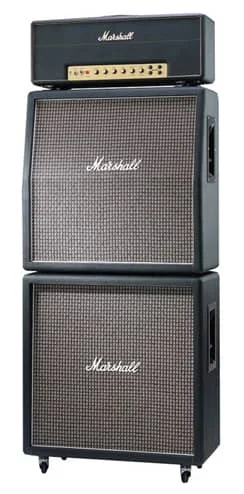
An iconic image of rock music, which revealed a band’s status based on the number of Marshall stacks the group had. Today, this type of amplification has fallen out of use, thanks to today’s improved sound systems.
Following the development of the 1959 Super Lead with four KT66 power tubes, Marshall began installing EL34 tubes in its amplifiers starting in 1966, due to the high cost of the KT66s.
This incident ultimately made the EL34 power tubes the brand’s most iconic vacuum tubes. This marked another step toward the pure high-gain amplifier. Since the EL34s entered distortion very easily, they delivered an even more aggressive tone.
Amplifiers Marshall: JCM800
In the early 1980s, Marshall developed the JCM800 series. These amplifiers were an essential part of the sound of hard rock and heavy metal bands throughout the 1980s.
Another of Marshall’s most notable series was introduced in 1987 to commemorate the brand’s 25th anniversary in the amplifier business: the Silver Jubilee series, featuring a silver-colored cabinet and front panel.
This series is largely based on the JCM800 series but features a half-power switch, such as the 100-watt 2555X head, which can also be used at 50 watts of output.
Amplifiers Marshall: Modern Series
JVM
As for the newer models, the JVM series is among the most highly rated for its great versatility, offering up to four channels that can be switched via a footswitch. Take, for example, the JVM410H head with 100 watts of power, which allows for different settings on each channel.
DSL: Most Popular Line
Although the most popular line right now is the DSL series, which offers Marshall’s authentic tube tone at more affordable prices and for a wide range of applications.
This series can meet the needs of any guitarist, from the hobbyist who wants a great sound at home to the professional who needs a powerful and reliable amplifier.
These amplifiers are quite versatile, featuring two channels with different levels of distortion, controllable via a pedal, and with a built-in reverb effect.
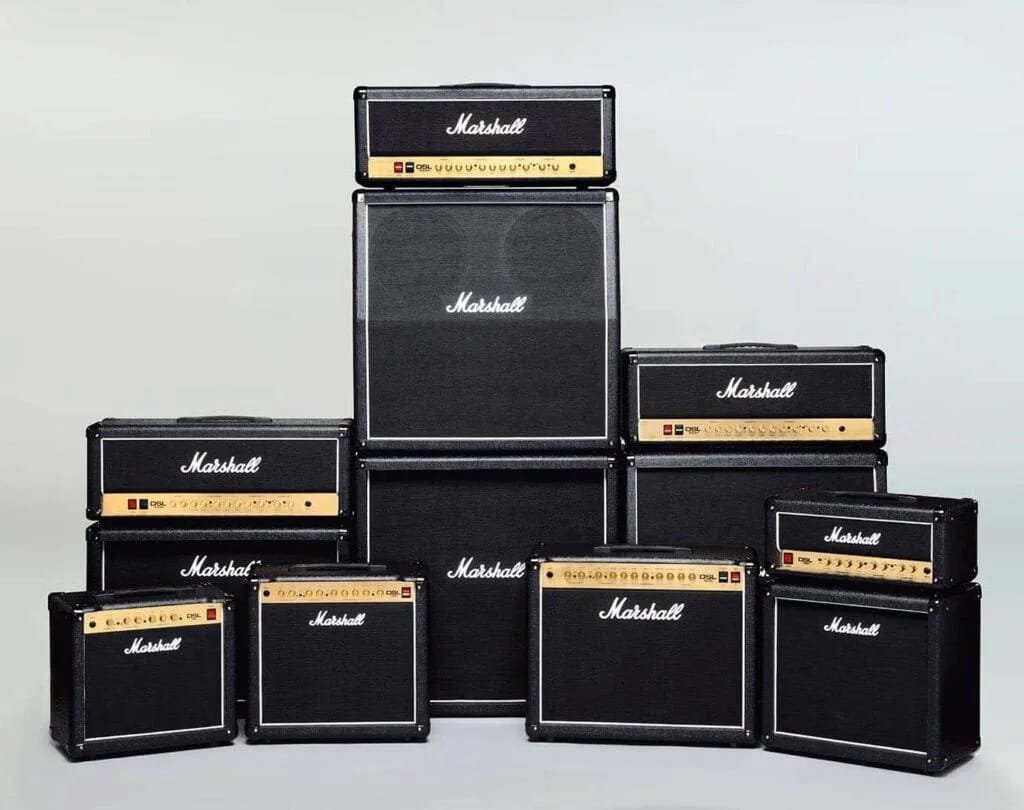
Marshall DSL1CR
We’ll take a closer look at the features of Marshall’s best-selling series, starting with the smallest model in the lineup, the Marshall DSL1CR.
This amplifier, which is barely larger than a paperweight, may not look like much, but its 8-inch Celestion speaker delivers authentic, organic tube distortion in true DSL style.
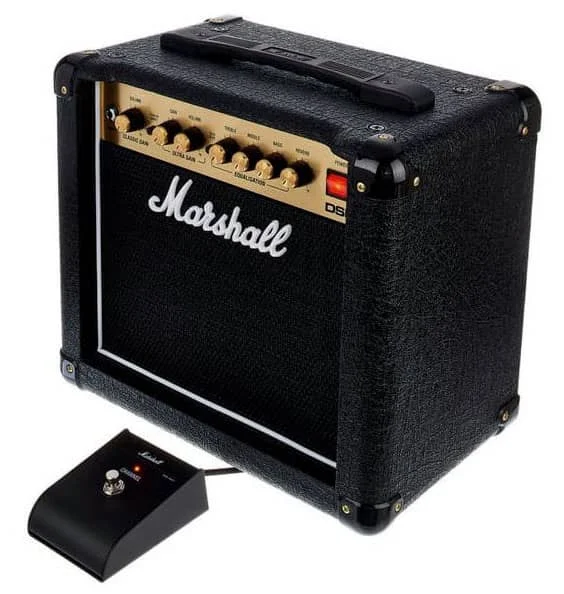
This small home-built combo features one ECC82 tube and two ECC83 tubes, and offers the same features as its larger counterparts, such as two channels, a reverb effect, bass, midrange, and treble EQ, an effects loop, a channel-switch pedal, and switchable power output ranging from 1 to 0.1 watts. It’s perfect for pushing the amp to its limit at low volumes, though if you need clean tones, you’ll have no trouble getting them either.
It also includes a standard headphone output, a feature that rounds out its home-use-oriented specifications ($400).
Amplifiers Marshall: DSL5CR
Next up is the Marshall DSL5CR, which features two ECC83 tubes and one ECC99, also known as the 12BH7. This amplifier is suitable for home use thanks to its switchable power output ranging from 5 to 1 watt, yet it offers enough power for use in rehearsals or the studio.
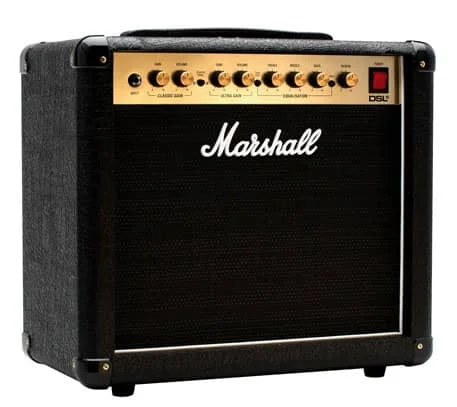
The DSL5CR features the same essential DSL characteristics as the previous model, but with a 10-inch speaker, for a price of approximately $660.
Marshall DSL20CR
Next on the list is the Marshall DSL20CR, featuring three ECC83 tubes and two EL34 tubes, a 12-inch speaker, and 20 watts of power for around $700. This is a whole different ballgame. It’s an amplifier designed for rehearsals with a full band and for small live performances.
So don’t even think about buying this amp for home use only, even though it can be run at 10 watts. Even then, it’s still too much power. As you can see, it’s not just about having the most expensive amp, but the one that best suits your needs.
Marshall DSL40CR
On the other hand, if we need even more power, we can always opt for the Marshall DSL40CR, which offers 40 watts switchable to 20 watts, for around $750. If we want to go up to 100 watts of power, we’d have to choose the Marshall DSL100HR head.
Even so, this head is affordably priced ($900) for a professional-grade unit of this type. Although in the head format, we also find other DSL models at 20 watts, and with a power output of just 1 watt.
Many may wonder how it’s possible to get such extraordinary amplifiers from a legendary brand at such a great price. The answer lies in the fact that they’re manufactured in Asia, unlike other series made in the United Kingdom.
Marshall Amplifiers: Origin Series
The Origin series is also manufactured in Asia. It is one of the latest series to be added to the Marshall catalog, but it has already gained great popularity due to its affordable prices and its sound, which harkens back to the brand’s less heavily distorted roots—hence its name.
Marshall Origin 20C
Currently, the least powerful model is the Marshall Origin 20C, which delivers up to 20 watts. It can also be set to 3 watts in its mid-range setting and 0.5 watts at its minimum setting. This makes it highly versatile and allows it to instantly adapt to the required power output.
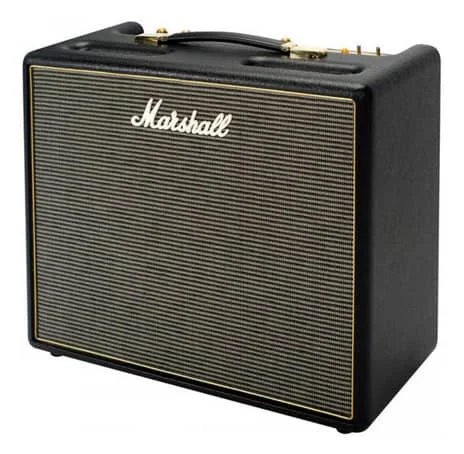
An amplifier with a very elegant design, priced at approximately $700. The Marshall Origin 20C features three ECC83 preamp tubes, two classic EL34 power tubes, and a 10-inch speaker.
It’s also available in a 50-watt version switchable to 10 and 5 watts, with a standard 12-inch Celestion speaker. And in 50 and 20-watt head versions.
Jim Marshall would go on to create one of the most important amplifier brands of all time. Although, in the end, Jim would simply be nicknamed “The Father of Noise”—the magical noise that changed the history of music.