
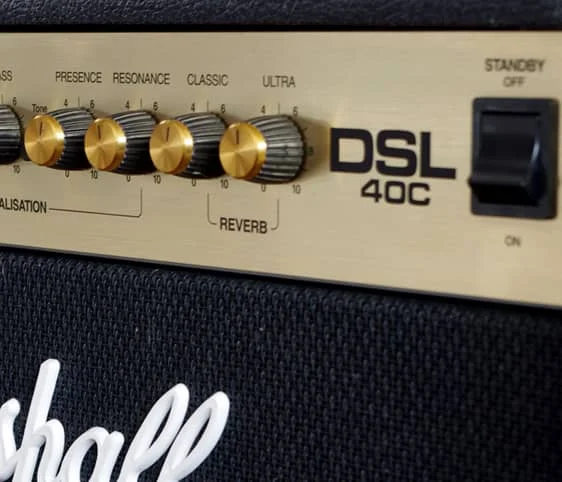
How to ELIMINATE NOISE from your Guitar Amp ✅ Tips for Identifying Factors That Cause Humming or Interference.
Reducing amplifier noise can often be essential, especially if your equipment is facing in the opposite direction. There are many factors that can cause buzzing or annoying noises, which interfere with the electrical circuit of guitar equipment.
The electrical circuit would start at the guitar pickups and continue through the wiring and pedals to the amplifier. This circuit can also be affected by the power supply of the pedals and the type of electrical power connection of our amplifier.
So all these factors are important when it comes to reducing interference, because if we neglect any of these components, noise will appear. Although zero noise is practically impossible. There will always be a slight hum that increases as we turn up the volume and, above all, distortion or gain, but obviously without reaching the point of becoming annoying.
How to ELIMINATE NOISE from your Guitar Amp: Pickups
The pickups most prone to generating noise would be single-coil pickups. However, this problem would not become noticeable until high levels of distortion were reached. In any case, the noise problem with this type of pickup at high saturation levels can be solved or attenuated with noise gates. Something I will discuss later.
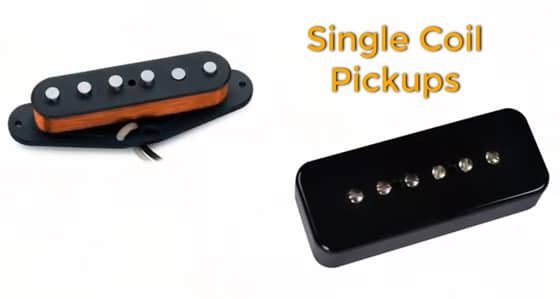
RWRP pickups
There are single coil pickups with reverse wound and reverse polarity known as RWRP. When a pickup of this type is activated with a standard single coil pickup, the hum is canceled whether they are connected in series or in parallel.
Stratocaster-style guitars usually have an RWRP pickup in the middle position to eliminate hum in positions 2 and 4 of the pickup selector switch. In other words, when the middle pickup is connected, together with the neck pickup or the bridge pickup.
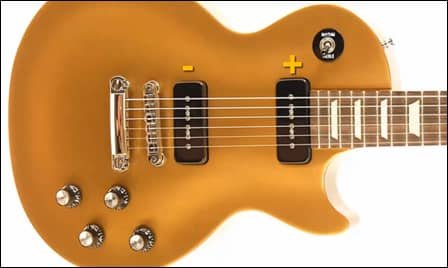
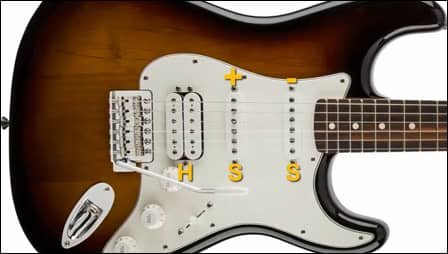
You can check your Strat to see if the noise is reduced in pickup selector positions 2 and 4. If so, your Stratocaster has a center pickup with reverse polarity, which is how it should be.
On guitars with two P90 pickups, and on HSS models, it is also common for some of the single coil pickups to be installed with reverse polarity.
So when installing new pickups on your guitar, it is a good idea to make sure that the new set of pickups maintains this feature in order to take advantage of this interesting quality.
How to ELIMINATE NOISE from your Guitar Amp: Humbucker
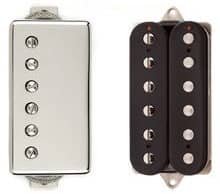
Humbucker pickups simply have the qualities mentioned above as standard. This type of pickup consists of two pickups with reverse winding and polarity, connected in series.
Consequently, the signal would be doubled, resulting in a sound with more punch and body, and the signal-to-noise ratio would be significantly improved.
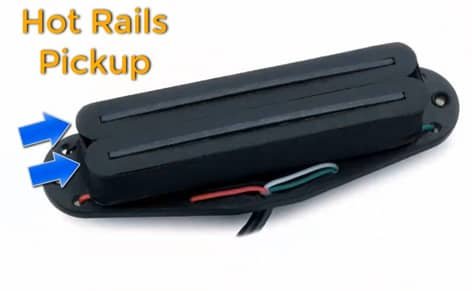
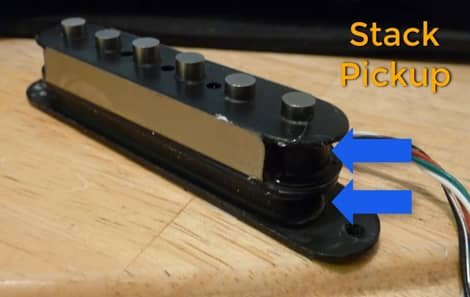
This type of double coil pickup manufacturing is not reserved solely for humbucker pickups. It is also used in other models such as Hot Rails, Z-Coil pickups, or Stack pickups, which use this same double coil system to eliminate noise.
To take interference elimination one step further, we have active pickups. The design of these pickups is based on a pickup that emits a low-impedance signal, processed through a preamplifier built into the circuit.
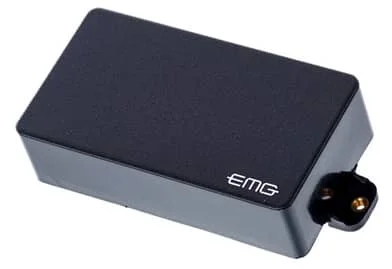
This preamplifier, powered by a 9V battery, boosts the output signal to a level that is less affected by electromagnetic interference.
The closer our guitar is to the amplifier, the more noise is generated. So it is advisable to be a 2 meters away from the amplifier, or any electronic system or device that may generate interference.
When our hands are not in contact with the strings, or with any metal part of the guitar, the noise increases. Solution: Do not remove your hands from the strings until you lower the volume of the guitar.
How to ELIMINATE NOISE from your Guitar Amp: Shielding
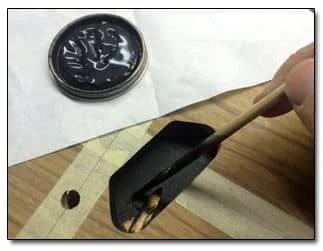
One method for eliminating interference would be to shield all of the guitar’s cavities so that all of its components are isolated. This can be done with adhesive copper foil or conductive paint. I recommend shielding with conductive paint because it is easy to apply and is also less likely to cause problems.
Cabling, Effects Pedals and Power Supplies
If we follow the circuit in the same direction as the electrical signal, we find the wiring leading to the amplifier. This wiring can generate noise if it is of poor quality.
Pedals can generate noise from two sources: the pedal itself and its power supply. The noise from a pedal is most likely also related to its quality. Power supplies for effects pedals can generate a lot of noise if they do not have good shielding against interference. We can use power supplies with isolated outputs to optimize this factor.
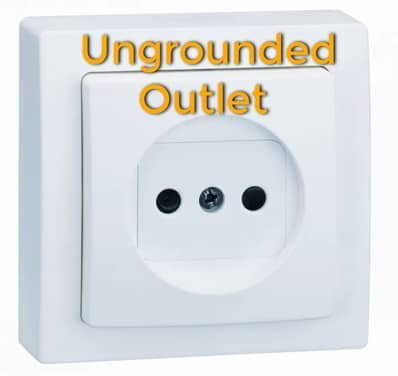
Several factors can also influence the amplifier, such as the quality of the device itself, the quality of the tubes, or whether the amplifier is connected to a grounded or ungrounded outlet.
On the page about preamp tubes, you will find instructions on how to solve noise problems in tubes, as well as information on the characteristics of different models and brands of vacuum tubes.
How to ELIMINATE NOISE from your Guitar Amp: Grounding👍
Connecting an amplifier to a grounded outlet is not only beneficial for noise reduction, but also essential for safety. This will prevent a possible electric shock by diverting it to the ground.
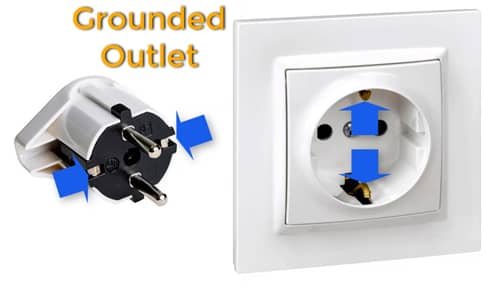
If it’s a tube amplifier, it wouldn’t be a simple shock. It would be more like getting bitten on the hand. So if you have a tube amplifier, my advice is not to use it in an ungrounded connection.
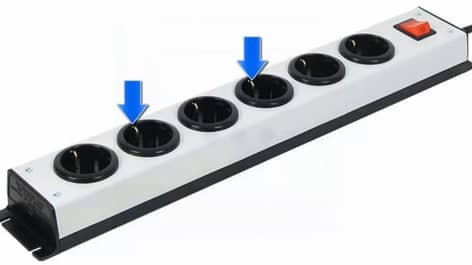
If there is no grounded outlet nearby, we will have to use a grounded power strip or extension cord to reach the appropriate outlet. If the extension cord is not grounded, the ground circuit will be cut off, and we will have achieved nothing.
How to ELIMINATE NOISE from your Guitar Amp: Noise Gate
If we use strong distortion and the noise persists, the only solution would be to install a noise gate in our equipment.
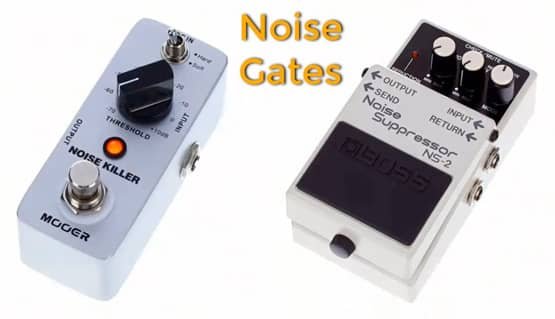
The noise gate cut off any sound that exceeds a certain volume level. Therefore, it is advisable to reduce the range of action of the noise gate, just enough to attenuate background noise. This will minimise the impact of the noise gate on the sound of the notes, which is more important than the noise itself.